


PCOS Meal Plan: A 7-Day Doctor-Reviewed Plan by PCOS Type (2026)
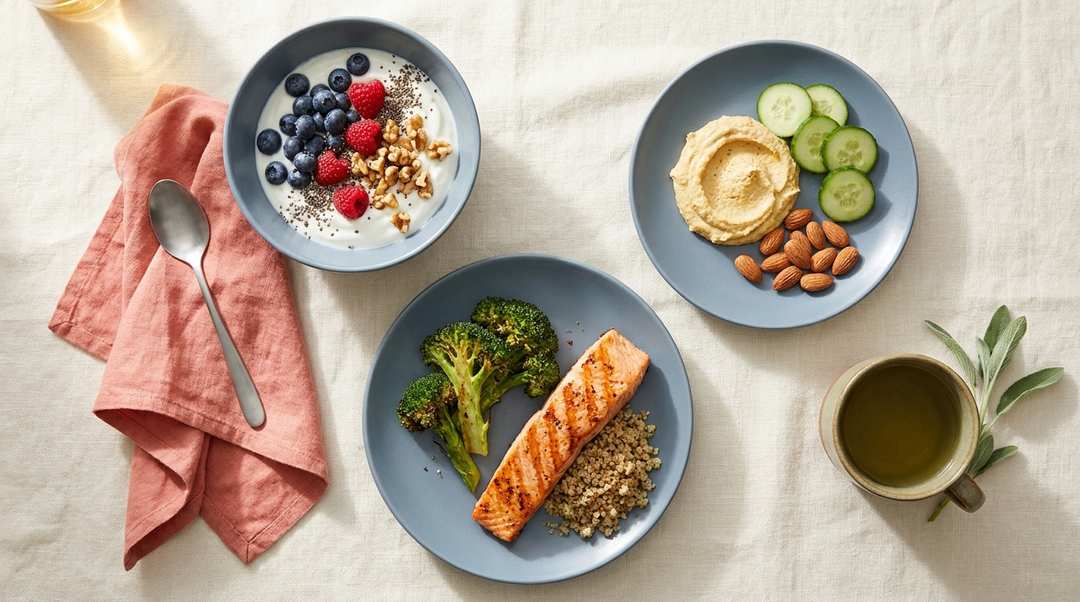
A free 7-day PCOS meal plan — protein-forward, low-glycemic, adapted to your PCOS type. MD-reviewed by an OB-GYN, with vegetarian and dairy-free swaps.

If you’ve ever followed a “PCOS diet” that was really just a generic low-carb plan rebranded, you already know the problem. Cravings come back by week two. Your cycle still skips. The scale moves a pound, then stalls. And the same plan that supposedly works for everyone with PCOS quietly stops working for you.
PCOS is not one condition with one meal plan. It is a metabolic and hormonal pattern that shows up in at least four distinct subtypes — insulin-resistant, inflammatory, adrenal, and post-pill — and each subtype responds to different food choices, meal timing, and macronutrient mixes.[1] The 7-day plan below is the version of “PCOS meal plan” we wish every dietitian started with: built on the 2023 international PCOS guideline, framed around your subtype, and designed to actually fit in a real week of grocery shopping and weeknight cooking.
Take the free 3-minute PCOS quiz →
In a nutshell
PCOS meal plan — 60-second answer. A PCOS-friendly meal plan is protein-forward (25–35 g protein per meal), built on low-glycemic carbohydrates (whole grains, legumes, non-starchy vegetables, berries) and anti-inflammatory fats (olive oil, fatty fish, nuts, seeds), eaten in three meals + one or two snacks to keep insulin steady through the day.[1][2] The Mediterranean dietary pattern has the strongest evidence base for improving insulin sensitivity, ovulation, and androgen levels in women with PCOS — and forms the backbone of the 7-day plan below.[2] Who it’s for: anyone diagnosed with PCOS or with suspected insulin-resistant features (irregular cycles, cravings, mid-section weight gain). Adjust by subtype — insulin-resistant phenotypes do best with stricter carb portioning; adrenal phenotypes need more carbs at dinner, not fewer.
By Jessica Craig, NBHWC, CFNC, CFNS. Last medically reviewed by Dr. Basma Faris, MD (OB-GYN) on 2026-05-12.
💌 Want it in your inbox every week? Join the Lose 42 lbs — practical, MD-reviewed PCOS tactics like the 7-day plan above, delivered weekly. A printable PDF version of this plan is coming soon to subscribers.
1. Why a “PCOS meal plan” is different from a generic healthy-eating plan
Most “healthy” eating plans are built around a single goal — usually weight loss, sometimes blood-pressure control. A PCOS meal plan is built around a different goal: lowering the chronic insulin spike that drives the cascade of symptoms most women with PCOS recognize.
Three differences matter:
- Carbohydrate timing and quality is non-negotiable. Women with PCOS show greater post-meal insulin and glucose excursions than non-PCOS controls eating the exact same meal.[1] The fix isn’t “no carbs.” It’s which carbs (low-glycemic, fiber-rich, paired with protein and fat) and when (front-loaded earlier in the day for most subtypes; weighted toward dinner for the adrenal subtype).
- Protein dose at each meal is therapeutic, not just nutritional. A meal under 20 g of protein doesn’t reliably trigger the satiety hormone signaling that helps PCOS-affected bodies stop eating on time.[7] The 25–35 g per meal target isn’t bodybuilder advice — it’s the threshold the satiety literature consistently identifies.
- Anti-inflammatory choices are weighted differently. PCOS involves low-grade chronic inflammation that interacts with insulin resistance.[1] Mediterranean-pattern eating — olive oil, fatty fish, nuts, legumes, vegetables, herbs and spices like turmeric and cinnamon — has the strongest evidence base for improving insulin sensitivity and androgen levels in women with PCOS.[2]
Dr. Helena Teede, the Monash University endocrinologist who chaired the 2023 international PCOS guideline, has been consistent in her public commentary that there is no single “PCOS diet” — but the pattern with the most data is Mediterranean, and the most reliable foundational principle is reducing post-meal glucose excursions.[1]
The takeaway: the dietary pattern matters more than the macronutrient ratio. Most women with PCOS who switch to a Mediterranean-style plate composition see improvements in cycle regularity and energy within 6–12 weeks — even before any meaningful weight change.
2. The 4 PCOS subtypes — and how each one changes the plan
This is the piece almost every other PCOS meal plan article skips. The 4-subtype framing comes out of functional and integrative endocrinology, and while not every clinician uses the exact same names, the underlying biology is well-described in the PCOS literature.[1][7]
| PCOS subtype | Typical signs | What changes in the meal plan |
|---|---|---|
| Insulin-resistant (≈70% of PCOS) | Mid-section weight gain, sugar cravings, skin tags, dark patches at neck/armpits, fasting insulin > 10 µIU/mL | Strictest carb portioning; carbs paired with protein + fat every time; no “naked” carb meals (e.g., toast alone, fruit alone); biggest carb portion at breakfast, smallest at dinner |
| Inflammatory | Joint pain, eczema/psoriasis, unexplained fatigue, IBS-type gut symptoms, elevated CRP | Add anti-inflammatory foods aggressively (fatty fish 3×/week, daily turmeric, daily berries, daily leafy greens); investigate gluten + dairy with a structured 4-week elimination if symptoms persist |
| Adrenal | Normal weight, regular-ish cycles, elevated DHEA-S, anxiety-driven, “wired and tired” pattern, history of high stress | More carbs at dinner (not fewer) to support cortisol recovery and sleep; avoid intermittent fasting; eat within 1 hour of waking; magnesium-rich foods at dinner (pumpkin seeds, dark leafy greens, dark chocolate) |
| Post-pill | PCOS symptoms appeared within 3–12 months of stopping hormonal birth control; previously regular cycles; often slim | Nutrient repletion focus (zinc, B6, B12, magnesium); same Mediterranean base; pattern usually self-corrects within 6–12 months if nutrition is supportive |
Don’t know your subtype? The most common starting place is the insulin-resistant version — it’s by far the largest group and it’s what the standard “PCOS diet” assumes. If the plan below doesn’t move your symptoms in 8–12 weeks of consistent application, the PCOS quiz walks you through the differential, and a deeper read of our insulin-resistance pillar will help you decide whether to layer on the inflammatory or adrenal modifications.
3. The macro framework (protein, carbs, fats — in plain English)
Skip the gram-counting at first. Build the plate this way at every main meal:
- Half the plate: non-starchy vegetables. Leafy greens, broccoli, cauliflower, peppers, cucumbers, tomatoes, mushrooms, zucchini, asparagus. Fiber, micronutrients, near-zero glycemic impact.
- A palm-sized portion of protein (25–35 g). Eggs, Greek yogurt, cottage cheese, chicken, turkey, fish, tofu, tempeh, edamame, lentils, beans. Aim for a different protein each day to vary micronutrients.
- A cupped-hand portion of low-glycemic carbohydrate (30–45 g net). Quinoa, steel-cut oats, sweet potato, lentils, beans, berries, citrus, kiwi, cherries, whole-grain sourdough. The cupped hand is roughly ½–¾ cup cooked.
- A thumb-sized portion of healthy fat. Olive oil, avocado, nuts, seeds, fatty fish. Fat is not the enemy — it’s the satiety lever that keeps the post-meal carb load from spiking insulin.
Daily target ranges (these are starting points, not prescriptions — calorie needs vary):
| Macro | Range | Why |
|---|---|---|
| Protein | 90–130 g/day (≈1.2–1.6 g/kg body weight) | Preserves muscle during weight loss, blunts post-meal glucose, increases satiety |
| Carbohydrate | 130–200 g/day (lower for insulin-resistant; higher for adrenal & athletes) | Enough to support thyroid, ovulation, exercise — not so much that insulin runs high all day |
| Fat | 60–90 g/day (≈30–40% of calories) | Hormone synthesis (cholesterol → progesterone, estradiol, testosterone) requires adequate fat; Mediterranean ratio is the target |
| Fiber | 30–40 g/day | Slows glucose absorption, feeds the gut microbiome, improves estrogen metabolism |
Two non-obvious rules worth memorizing:
- No “naked carbs.” Never eat a carbohydrate alone. Fruit gets a handful of nuts. Toast gets eggs. Rice gets protein + vegetables. This single rule — applied for 4 weeks — has produced the most visible cycle and energy changes in our coaching cohort.
- Front-load protein at breakfast. A 30 g protein breakfast (e.g., 3 eggs + 1 cup Greek yogurt) reliably crushes mid-morning sugar cravings for most insulin-resistant PCOS women. A bagel-and-coffee breakfast almost guarantees a 3 p.m. crash.
4. The 7-day PCOS meal plan (Mediterranean-base, ~1,800–2,000 cal, adjustable)
This is the insulin-resistant default. Subtype modifications are in Section 5 below.
| Day | Breakfast (~30 g protein) | Lunch (~30 g protein) | Snack | Dinner (~30 g protein) |
|---|---|---|---|---|
| Mon | Greek yogurt parfait — 1 cup full-fat plain Greek yogurt + ½ cup mixed berries + 2 Tbsp chia + 2 Tbsp walnuts | Mediterranean chickpea salad — 1 cup chickpeas + diced cucumber, tomato, red onion, feta, parsley, olive oil + lemon | Apple + 2 Tbsp almond butter | Baked salmon (5 oz) + roasted broccoli + ½ cup quinoa drizzled with olive oil & lemon |
| Tue | 3-egg veggie scramble (spinach, mushrooms, tomato) + ½ avocado + 1 slice whole-grain sourdough | Leftover salmon over mixed greens with cherry tomatoes, olives, feta, olive oil + lemon | Cottage cheese (¾ cup) + ½ cup raspberries | Sheet-pan chicken thighs (5 oz) with bell peppers, zucchini, red onion + 1 small sweet potato |
| Wed | Cottage cheese pancakes — ¾ cup cottage cheese + 2 eggs + ¼ cup oats blended, cooked. Top with ½ cup strawberries | Big salad — 4 oz grilled chicken, mixed greens, chickpeas, cucumber, cherry tomato, sunflower seeds, olive oil + balsamic | Hummus (¼ cup) + sliced cucumber, carrot, bell pepper | Turkey-and-lentil chili (1.5 cups) with avocado + cilantro on top |
| Thu | Smoothie — 1 cup unsweetened almond milk + 1 scoop unflavored whey or pea protein + 1 cup spinach + ½ frozen banana + 1 Tbsp almond butter + 1 Tbsp ground flax | Leftover turkey chili over ½ cup quinoa with avocado | Hard-boiled eggs (2) + handful of cherry tomatoes | Baked cod (5 oz) + roasted Brussels sprouts + ½ cup wild rice with olive oil and lemon |
| Fri | Veggie frittata — 3 eggs whisked with sautéed spinach, mushrooms, feta, baked. Side of ½ cup berries | Mediterranean grain bowl — ½ cup farro + 4 oz grilled shrimp + cucumber, tomato, olives, feta, olive oil + lemon | Greek yogurt (½ cup) + 2 Tbsp pumpkin seeds + cinnamon | Grass-fed beef stir-fry (4 oz) with broccoli, snap peas, bell pepper + ½ cup brown rice |
| Sat | Savory oats — ½ cup steel-cut oats cooked, topped with 2 fried eggs, sautéed greens, ½ avocado | Big salad with leftover stir-fry over mixed greens, sesame seeds, olive oil + rice vinegar | Apple + 2 Tbsp peanut butter | Baked chicken thighs (5 oz) with roasted root vegetables (carrot, parsnip, beet) + side salad |
| Sun | Smoked salmon (3 oz) + cream cheese + ½ whole-grain bagel + cucumber + capers + side of berries | Lentil soup (1.5 cups) + side salad with olive oil & lemon + 1 oz feta crumbled on top | Almonds (¼ cup) + 1 small orange | Grilled lamb chops or tempeh (5 oz) + roasted eggplant + tabbouleh (½ cup) |
Daily hydration: 80–100 oz water, 1–2 cups green or spearmint tea (spearmint has small-but-real evidence for lowering androgens in PCOS),[7] minimal sweetened drinks.
Still wondering which PCOS type you are? Find out in 3 minutes.
5. Subtype modifications (use only what applies to you)
The plan above is the insulin-resistant default. Layer on these modifications based on your subtype.
Insulin-resistant (the default — no changes needed). Stay strict on the no-naked-carbs rule. If weight isn’t moving after 12 weeks of consistent application, consider talking with your clinician about metformin or inositol.
Inflammatory. - Add fatty fish a fourth time per week (sardines on toast or canned salmon work). - Add 1 tsp turmeric daily (golden milk at night, or in scrambled eggs). - Replace inflammatory oils (soybean, corn, canola in processed foods) with olive oil, avocado oil, or grass-fed butter. - Trial a 4-week strict gluten-free + dairy-free phase if joint pain, eczema, or gut symptoms persist on the base plan. Reintroduce one at a time and note symptom changes.
Adrenal (the counterintuitive one). - More complex carbs at dinner — a full ¾–1 cup cooked grain, not ½. The night carb load supports cortisol recovery and improves sleep. - Eat within 60 minutes of waking. Do not intermittent-fast — IF can worsen adrenal-pattern PCOS by stacking morning cortisol on top of fasting glucose dips. - Magnesium-rich foods at dinner — pumpkin seeds, dark leafy greens, dark chocolate (1 oz, 70%+). - Caffeine cap: 1 cup before noon, none after.
Post-pill. - Same Mediterranean base. - Prioritize zinc-rich foods (oysters, beef, pumpkin seeds, lentils) — birth control depletes zinc, which is foundational for ovulation. - B6, B12, folate are commonly depleted — eggs, fish, leafy greens, fortified whole grains. - This subtype usually self-corrects within 6–12 months on a supportive plan.
Trying to conceive (TTC) overlay — regardless of subtype: - Pregnancy-grade folate (400–800 µg/day) and choline (450 mg/day) from food or prenatal — eggs are the cheapest reliable source of both. - Omega-3 EPA+DHA 1–2 g/day from fatty fish or a third-party-tested supplement (mercury concerns mean two servings of low-mercury fish/week, not tuna five days running). - Cycle-syncing isn’t necessary, but extra protein and gentle carbs in the second half of the cycle (luteal phase) can soften PMS and protect against under-eating during the energy-hungry late cycle.[3]
On GLP-1s (Ozempic, Wegovy, Mounjaro, Zepbound) for PCOS: - The biggest meal-plan change is protein insurance. GLP-1s suppress appetite so effectively that many women drift into 40–50 g protein days, which destroys muscle and stalls fat loss. Target 100+ g protein daily — set a phone alarm if needed. - Hydrate aggressively (88+ oz water/day) — dehydration is the most common cause of GLP-1 side effects. - Slow, fiber-rich meals — eat over 20–30 minutes; the suppressed satiety signal makes it easy to overeat before your brain catches up to fullness. - See our deep-dive: Ozempic for PCOS Weight Management.
6. Adaptation swaps (vegetarian, dairy-free, gluten-free, budget)
Vegetarian / vegan swaps:
| Animal protein | Plant swap (~30 g protein) |
|---|---|
| 5 oz chicken | 1 cup tempeh + ¼ cup hemp seeds |
| 5 oz salmon | 1 cup edamame + ½ cup lentils + 1 Tbsp tahini |
| 3 eggs | ¾ cup tofu scramble + 2 Tbsp nutritional yeast + 2 Tbsp pumpkin seeds |
| 1 cup Greek yogurt | 1 cup unsweetened soy yogurt + 2 Tbsp chia seeds |
| Cottage cheese | 1 cup edamame + 2 Tbsp hemp seeds (or a soy-based cottage cheese alternative) |
Dairy-free: swap Greek yogurt for unsweetened coconut or soy yogurt (check protein — most are lower; add 1 Tbsp hemp or chia to compensate). Swap feta for marinated white beans. Swap cream cheese for cashew cream.
Gluten-free: swap whole-grain sourdough for a millet-and-buckwheat blend, swap farro for quinoa or buckwheat, swap bulgur in tabbouleh for cauliflower rice or quinoa. The plan is already 80%+ naturally gluten-free.
Budget swaps (under-the-radar): - Canned wild salmon (≈$3) replaces fresh fillet (≈$10–14). - Sardines on whole-grain toast = a $1.50 lunch with 18 g protein and the highest omega-3 density of any food. - Frozen wild blueberries = same antioxidants, ⅓ the price of fresh. - Lentils replace any meat protein at ≈$0.30/serving with similar satiety. - Cottage cheese (≈$3 for 24 oz) = the highest-protein cheap dairy on the shelf.
7. How Aspect approaches the meal plan (CGM, coaching, the 4-subtype framework)
This is where Aspect’s PCOS Protocol differs from a generic meal plan. The base plate composition above is identical — Mediterranean, protein-forward, low-glycemic. What changes is the personalization layer on top.
In our 12-week PCOS Protocol cohort, every member wears a continuous glucose monitor (CGM) for the first 14 days. The CGM data does two things a static meal plan cannot:
- It tells you which “PCOS-friendly” foods actually spike your glucose. Oats spike some women’s glucose to 180 mg/dL — that’s not Mediterranean, that’s a cereal bowl. Quinoa is well-tolerated for most but causes a 50-point spike in roughly 1 in 5 women with PCOS. Personal data beats principle.
- It shows you the post-meal walk effect. A 12-minute walk after a meal flattens the post-meal glucose curve by 30–50%. This is the highest-ROI behavior change in the protocol — and it’s invisible without a CGM.
After day 14, the meal plan adapts: foods that spiked you get portioned down or paired differently; foods you tolerated well get scaled up. The 4-subtype lens — informed by your hormone panel, your CGM data, and your symptom pattern — produces the final plan. The 15-study evidence base behind the protocol covers Mediterranean dietary patterns,[2] time-restricted eating in PCOS,[5] protein satiety,[7] and lifestyle-first guideline frameworks.[1][6]
The takeaway for everyone — Aspect member or not: the published 7-day plan is a strong starting point. Your body’s response is the editor.
8. Important things to consider (and when to talk to a clinician)
- Don’t undereat. Many PCOS women have been told to cut calories aggressively. Sustained calorie restriction below ≈1,400/day can blunt thyroid function, worsen sleep, raise cortisol, and stop ovulation entirely. The 7-day plan above is built around 1,800–2,000 calories — a reasonable starting point for most women who are not currently underweight.
- Cycle changes take 8–12 weeks. Cycle regularity is the slowest-moving needle. Energy, cravings, and skin usually shift within 2–4 weeks; ovulation and cycle length typically need 3 cycles of consistent eating.
- Track one thing, not five. The most common reason this plan fails is “I tried to overhaul everything at once.” Pick one metric — sleep, protein at breakfast, post-meal walks — and stay with it for 4 weeks before adding the next.
- See your clinician if cycles still haven’t returned to a 21–35-day range after 6 consistent months, if hirsutism is worsening, or if you suspect insulin resistance is severe (fasting insulin > 15 µIU/mL, fasting glucose > 100 mg/dL, or a family history of type 2 diabetes). The plan is supportive; it is not a substitute for medical evaluation.
9. Frequently asked questions
Is there a free PCOS meal plan I can save and print? Yes — the 7-day plan in this article is fully readable on-page and can be printed directly from your browser. A dedicated printable PDF version (with grocery list, vegetarian and dairy-free swaps, and a macro tracker) is shipping with an upcoming Lose 42 lbs issue — subscribe to receive it when released.
What foods should I avoid on a PCOS meal plan? No food list is universal, but the patterns with the most consistent evidence for worsening PCOS symptoms are: sugar-sweetened beverages (especially soda and sweetened coffees), refined-flour foods eaten alone (white bagels, breakfast cereal, pastries), industrial seed oils used at high heat (soybean, corn, cottonseed in fried foods), and ultra-processed snack foods marketed as “healthy.”[1][2] Alcohol is best limited to 0–3 drinks per week for women trying to manage PCOS symptoms — it raises liver insulin resistance and disrupts sleep.
Can I lose weight on a PCOS meal plan without counting calories? For about 6 in 10 women with insulin-resistant PCOS, yes — the protein-forward + low-glycemic + Mediterranean structure tends to self-regulate calorie intake within a sustainable range. For the other 4 in 10 — particularly those with longer-standing weight gain or co-existing insulin resistance — modest tracking (e.g., 2 weeks of measuring protein at each meal) usually unblocks progress. Aggressive calorie-counting is rarely necessary and often backfires.
Can I do intermittent fasting on a PCOS meal plan? Sometimes. The 2024 systematic review of time-restricted eating in PCOS found modest improvements in body weight, BMI, and insulin sensitivity — but most studies used a 14:10 or 16:8 window with eating ending by 8 p.m.[5] Adrenal-pattern PCOS should not do IF — it can worsen the cortisol pattern. Insulin-resistant PCOS may benefit from a 12-hour overnight fast, with the eating window centered on daylight hours. TTC women generally should not fast — the energy-restriction signaling can suppress ovulation.
What about dairy and gluten — do I have to cut them out? Not unless you have symptoms. The 2023 PCOS guideline does not recommend blanket elimination of dairy or gluten.[1] If you have inflammatory-subtype features (joint pain, eczema, gut symptoms), a structured 4-week trial elimination — done well — can clarify whether either is contributing for you. Many women feel best on full-fat dairy in moderation and naturally low-gluten patterns (Mediterranean is mostly gluten-free already).
How long until I see results on this meal plan? Energy and cravings: 1–3 weeks. Skin (acne, oil): 6–10 weeks. Cycle regularity: 8–16 weeks (= 2–3 cycles). Visible fat loss in PCOS-pattern weight gain: 8–12 weeks of consistency, sometimes longer. Use the trajectory, not the daily scale.
10. The bottom line
A PCOS meal plan is not a diet. It is a long-term plate composition plus a subtype-aware modification layer that gradually lowers the post-meal insulin spike driving most of your symptoms. The Mediterranean pattern is the evidence-backed backbone. Protein at every meal is the satiety lever. No-naked-carbs is the rule that produces the visible changes. And the 4-subtype framework is what turns “PCOS meal plan” from a generic listicle into something that fits your body.
If you want a faster path through this — including a personalized version informed by your CGM data and hormone panel — that’s what Aspect’s PCOS Protocol is built for. If you’d rather DIY, the 7-day plan above is the strongest free starting point on the internet for women with PCOS in 2026 — and a printable PDF version is shipping to PCOS Letters subscribers soon.
Not sure which PCOS type you are? Find out in 3 minutes.
Take the free Aspect Health PCOS quiz — get your subtype, the meal-plan modifications that match it, and a clear next conversation to have with your clinician.


.avif)
