


PCOS Awareness: What Happened When 12 Women Told Their Real Stories
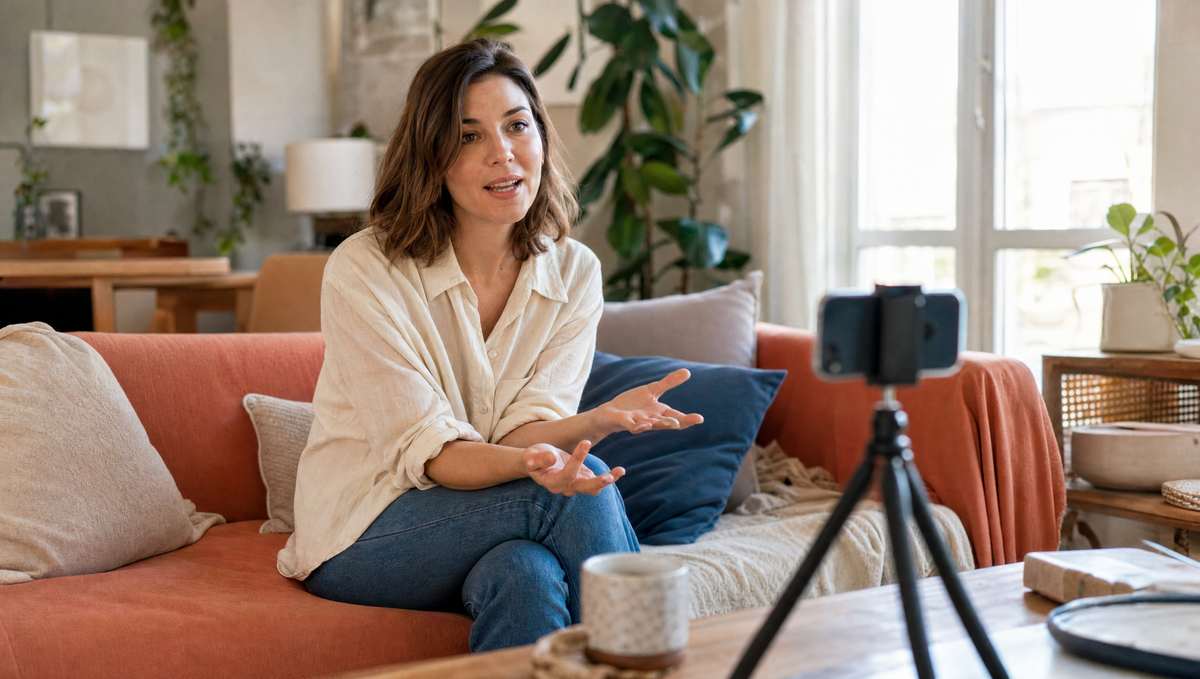
Up to 70% of PCOS cases go undiagnosed. We asked 12 women who live with it to talk honestly - and their videos reached over 1.7 million people.

Polycystic ovary syndrome affects an estimated 8–13% of women of reproductive age — and up to 70% of them are never diagnosed.[1] That is the World Health Organization’s own figure, and it is the single most important number in women’s hormonal health, because it means the most common endocrine condition in women is also one of the most invisible.
Almost nobody arrives at a PCOS diagnosis quickly. They arrive after years of being told their periods are “just irregular,” their weight is “just discipline,” their acne is “just hormones,” their exhaustion is “just stress.” The word awareness gets used a lot in this space. But awareness of the term isn’t the problem. Recognition of the symptoms is.
{{button}}
In a nutshell
PCOS awareness — the 60-second version. PCOS affects 8–13% of reproductive-age women and up to 70% are undiagnosed. Most women recognise their own symptoms only after hearing another woman describe them out loud — not from a clinical checklist. So we partnered with a creator marketing team and handed the microphone to 12 women living with PCOS and hormonal health conditions. Their videos were seen more than 1.7 million times. If what they describe sounds familiar, that recognition is worth taking to a clinician.
Awareness isn’t a word problem. It’s a recognition problem.
Ask a room of women whether they’ve heard of PCOS and most hands go up. Ask which of them know that PCOS can present as hair thinning at the crown, or as stubborn weight around the middle that behaves differently from ordinary weight gain, or as the insulin resistance sitting underneath all of it, and the room goes quiet.
That gap is where the diagnostic delay lives. The 2023 international guideline for PCOS — developed with input from clinicians and patients across six continents — is unusually blunt about it: women consistently report dissatisfaction with how long diagnosis took and how little information they received when it finally came.[2]
You cannot close that gap with a clinical infographic. Nobody reads a symptom checklist and thinks that’s me. They think that’s a list.
What does work is hearing a specific person describe a specific morning — the third alarm, the jeans that fit last month, the appointment where they were told to come back in a year. That is the moment recognition happens. So that is what we set out to fund.
Why we handed the microphone over
We could have written more articles. We write a lot of them, and they help — but they reach the woman who is already searching. The woman who doesn’t yet know what to search for never sees them.
So we did the opposite of a content campaign. We partnered with Mighty Joy, and the creator matching and selection ran on their platform, Superdeal. The brief we gave it was narrower than most brands would set: don’t find us the biggest accounts, find women whose audiences already trust them on health — and wherever possible, women who live with PCOS or a hormonal condition themselves.
That is a harder match than it sounds. Follower count is the easy filter; audience composition is the one that decides whether a video lands with anyone who needs it. Superdeal let us screen candidates on what actually mattered — how much of each creator’s audience was women, how much was US-based, and which topic community they genuinely belonged to (PCOS, hormonal health, fertility, weight, fitness) rather than which hashtags they used.
We reviewed more than 50 creators that way. Twelve published.
The fit filter cost us reach, and we let it. We turned down creators with several times the following of the ones we chose, because the connection to PCOS wasn’t real and the audience would have known. The brief to the women we did work with was deliberately loose: talk about your own experience, in your own words. No script. No claim we could not stand behind. If the product didn’t fit your life, say so.
Between them, those twelve women reach a following of more than 1.3 million.
The stories
Torri Webb — on what actually changed once she could see her own glucose data.
Delaney Williams — on living with PCOS in her twenties and how long it took to get taken seriously.
Gabriella Pacheco — on the symptoms she spent years explaining away.
Chanel Robinson — on what she wishes someone had told her at her first appointment.
Dr. Leah Gordon — a fertility physician on why blood-sugar stability belongs in the PCOS conversation.
Desiree Schnell — on why she is done with restriction as a strategy.
Also part of the campaign: Hannah Lee, Carine Delacroix, Amy Macedo, Logan Dawson and Karra Herrick.
Watch a few of them back to back and a pattern emerges that no survey would have surfaced.
Almost none of them opened with the diagnosis. They opened with the symptom they had been dismissed about — and in the comments underneath, the same three words appear over and over, in different accounts, from different women, in different states: I have this.
What 1.7 million views actually bought
Across Meta and TikTok, these videos were served more than 1.7 million times.
We want to be precise about what that number is and isn’t. It is not a sales figure, and we are not presenting it as one. It is a measure of how many times a woman scrolling her feed encountered someone describing PCOS honestly — often for the first time.
For a condition where 70% of cases go unrecognised, that is the metric that matters. A woman who sees one of these videos and books an appointment she has been putting off is a win we cannot track, cannot attribute, and would run the campaign again for.
The comment sections are the real report. Women asking which symptoms count. Women describing years of being told nothing was wrong. Women tagging their sisters. None of that shows up in an analytics dashboard, and all of it is the point.
What we learned about how women talk about PCOS
Three things surprised us.
- Specificity beats education. The videos that travelled furthest weren’t the ones explaining what PCOS is. They were the ones naming one concrete, unglamorous detail — a particular kind of fatigue, a particular conversation with a doctor. Generalities slide past. Details stop the thumb.
- Nobody wants to be inspiring. The most-watched creators were not the transformation stories. They were the women in the middle of it, saying so.
- Being believed is the unmet need. We expected questions about treatment. We got, overwhelmingly, relief at hearing the experience described accurately. A significant number of women in those comments were not looking for a protocol. They were looking for evidence they weren’t imagining it.
That has changed how we write, how we build, and what we ask our coaches to lead with.
If any of this sounds like you
You do not need a diagnosis to start paying attention to your own symptoms, and you do not need to have every symptom on a list to be worth investigating. Irregular cycles, unexplained weight changes, hair thinning, persistent acne past your teens, fatigue that sleep doesn’t fix — any combination of those deserves a proper conversation with a clinician, not a brush-off.
If the women in these videos described something you recognised, that recognition is data. Take it seriously.
⚠️ This article is informational and is not medical advice or a diagnosis. PCOS is diagnosed by a qualified clinician — please bring these symptoms to yours.
{{pink-banner}}
.jpg)


.avif)
