


Fertility test at home: How do at-home fertility kits work?
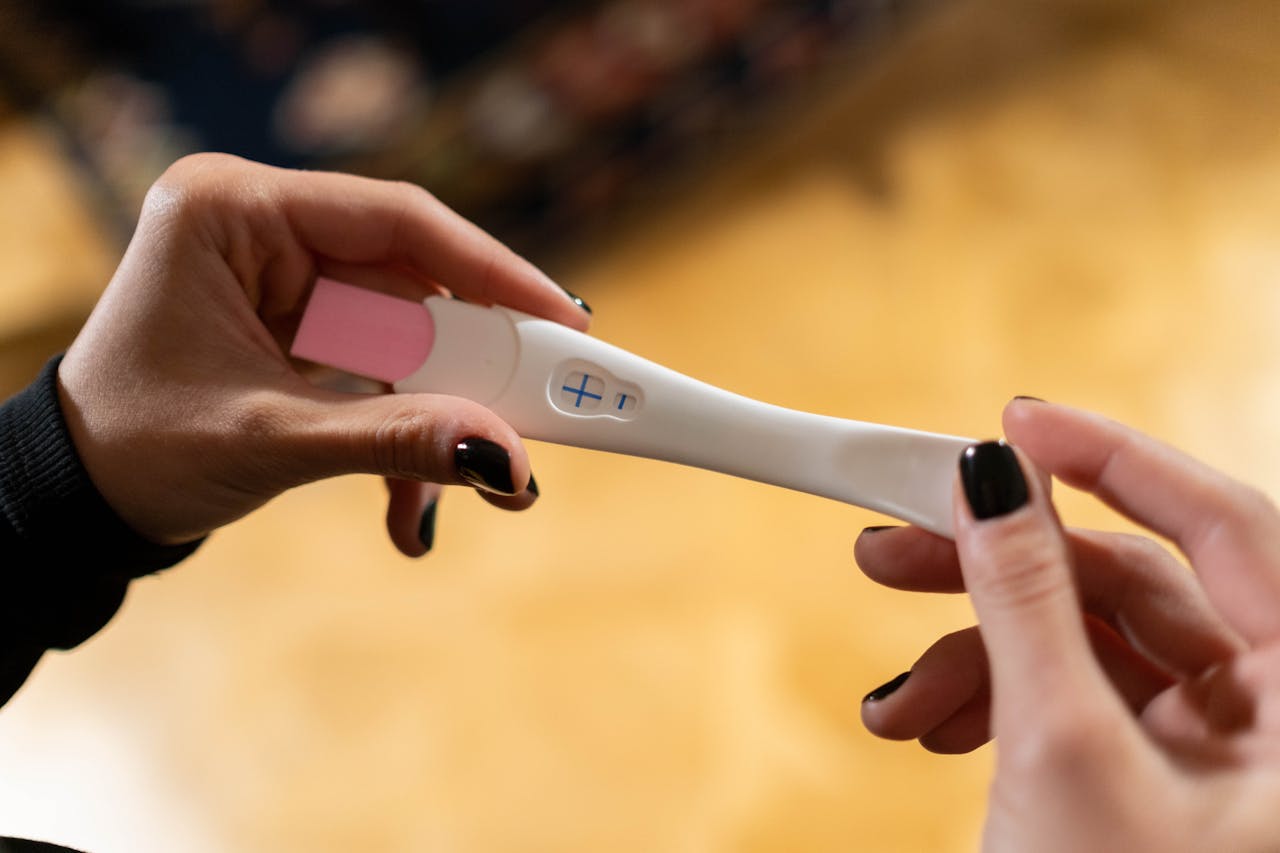
Is it possible to do a fertility test at home? Click to find an all-around guide to at-home tests meant for evaluating fertility, and get the answers you need.

When you’ve been actively trying to conceive for over a year (or half a year if you’re 35+), it can feel frustrating. Luckily, with the help of a comprehensive fertility assessment and treatment, it’s possible to detect the underlying cause and achieve the desired pregnancy.
Although the full fertility assessment implies seeing the fertility specialist and having a series of relevant tests, doing a fertility test at home can be a good starting point before you see your doctor. There are four common types of fertility tests that you can use at home:
- Ovulation predictor kits
- FSH tests
- Combined hormonal tests (including those that imply sending your samples to the lab)
- Semen analysis tests
These at-home options can help you understand your fertility better and define whether you need to see a professional.
{{button}}
Infertility is a condition that implies the inability to achieve a pregnancy after over one year or more of actively trying. It can affect both female and male reproductive systems, and affects around one in six people in their reproductive years.
If you’re hoping to have a baby, of course, even thinking about infertility can be terrifying. Still, if you’ve been actively trying and didn’t conceive within a year, there might be a chance that something’s holding you back from it. The good news is that many underlying causes of infertility can be treated by lifestyle adjustment, medication, surgery, and other clinical methods. In 85% to 90% of cases, it’s possible to achieve pregnancy after a timely diagnosis and proper care. And that’s where fertility testing means a lot.
In this article, we’ll delve into the details of diagnosing infertility and doing a fertility test at home, in particular. Let’s dive in!
What Is Fertility Testing, in General?
Fertility testing is a cumulative term that stands for a complex assessment of the reproductive system and hormones to detect the potential issues that might be holding couples back from getting pregnant. It is performed on both females and males who are in couples that are actively trying to conceive, but with no luck.
In a medical setting, fertility testing is assigned by a fertility specialist based on your specific situation and medical history. Currently, there are many different diagnostic tools used for this purpose, including:
In women:
- Fertility blood tests
- Ovarian reserve testing
- Genetic testing
- Pelvic ultrasound
- Sonohysterogram
- Hysterosalpingogram
- Hysteroscopy
In men:
- Hormone blood tests
- Genetic testing
- Imaging testing (ultrasound)
- Sperm function tests
- And others
Who Might Need Fertility Testing?
Before we move on to the specs of doing a fertility test at home, let’s quickly clarify who might need such tests in the first place.
As was mentioned earlier, fertility testing is used to detect the possible issues that might be holding you back from getting pregnant. Respectively, it’s typically performed when there is a difficulty conceiving. The general rule of thumb is to consider fertility testing if:
- You’ve been unsuccessfully trying to conceive for more than one year (if you’re under 35).
- You’ve been unsuccessfully trying to conceive for more than six months (if you’re 35 or over).
Also, you might consider testing if you have abnormal periods, a history of miscarriages, diagnosed reproductive system issues, or other conditions that might affect conception, such as endometriosis or PCOS.
Is There a Way to Test Fertility at Home?
As you already know, fertility testing normally includes having one of the available medical evaluations recommended by the fertility specialist. But can you test your fertility at home for starters? The short answer is “yes.”
There are a number of at-home fertility tests meant for females and males. These tests come in kits that allow you to assess ovulation, semen, and hormones. Although they should not be considered a substitute for professional medical screening, such tests can become a good starting point for understanding your fertility and seeking the help of a specialist if necessary.
Fertility Test at Home: Main Types
If you decide to test your fertility at home, there are three options that can be considered:
Ovulation Predictor Kits
Ovulation kits are among the most common at-home fertility tests. These tests work by assessing the levels of luteinizing hormone (LH) in your urine. When your next ovulation is approaching, LH levels surge sharply about 24 to 48 hours before the egg is released. These kits can tell you two important things:
- Whether you ovulate normally.
- When is the best time for conception?
If you don’t detect an LH surge around the time of ovulation, it might be a sign to see a fertility specialist to do a follow-up blood test and detect whether there are any issues with ovulation.
Important: Although ovulation predictor kits can be rather helpful, they may show false positive results in some women. In particular, women with polycystic ovary syndrome (PCOS) tend to have elevated LH levels at different points in their cycle. They may also have long anovulatory cycles, which makes it hard to test ovulation.
FSH Test
Another popular type of at home fertility test female is a test that evaluates the level of follicle-stimulating hormone (FSH). FSH is the primary hormone associated with female ovarian reserve. This reserve stands for the number of eggs you have remaining. And a test helps determine the size and health of the reserve, which could give valuable insights into your fertility.
At-home FSH tests work by determining the level of FSH in the urine. The test is recommended to be performed on day 3 of the menstrual cycle. If your FSH levels are within a normal range, it indicates a good ovarian reserve. And elevated levels of this hormone can signal that your ovaries are producing fewer healthy eggs.
Important: At-home FSH tests can sometimes show false results. The thing is that FSH levels can vary from one cycle to another. That is, a single test result with a high reading doesn’t necessarily have to be a cause for concern. Also, certain types of medications and hormonal birth control can affect the accuracy of results.
Combined Hormonal Test
While traditional ovulation kits and FSH tests only target one type of hormone at a time, now, there are also newer, more comprehensive at home fertility test female options. Combined hormonal tests target a variety of essential fertility hormones simultaneously. Some hormone types they can track include:
- LH
- FSH
- Anti-Müllerian hormone (AMH)
- Thyroid-stimulating hormone (TSH)
- Estradiol
- Free thyroxine
- Prolactin
The specific combination of hormones that you can check depends on the chosen test type. The process of testing also varies. There are fully at-home urine tests that give you instant results. But also, there are at-home kits to collect blood samples and send them to the professional lab. This kind of test will take longer to receive the results. But it can offer a deeper look into your reproductive health.
Semen Analysis Test
The only type of fertility test at home meant for men is a semen analysis kit. This kind of test is used to detect sperm presence in the semen sample, with some tests also assessing how well the sperm moves.
Although it can be a good starting point, it’s important to remember that at-home semen analysis is not at all as comprehensive as a complete lab analysis. That is, if you want a deep look into sperm vitality, motility, morphology, and other important indicators, it’s important to have a complete medical assessment.
Important: At-home semen analysis tests are mainly aimed at detecting high or low sperm counts. However, a low reading isn’t always a cause for concern. Fertility specialists emphasize that testing too soon after a previous ejaculation is a common cause for low counts.
FAQ
How to test fertility at home?
You can do it using one of the three available test options. At home fertility test female options include ovulation predictor kits and FSH tests. The first option is used to detect ovulation and define whether it occurs regularly and around the expected time. The second option tests FSH levels, which stand for the size and health of the remaining ovarian reserve. Both tests are performed using the urine sample. For accurate results, it’s recommended to collect first-morning urine and follow the instructions of the chosen test, most importantly, the recommended timing for doing it.
For testing fertility in males, it’s possible to use semen analysis tests. This kind of test detects sperm presence and movement. The most important tip is to collect semen samples for this test two to five days after the previous ejaculation. This should help prevent getting falsely low counts in the result.
What is the best at home fertility test?
It’s hard to name a single best at home fertility test. As you now know, there are several testing options available for females, and each of them has certain pros and limitations. However, in general, it’s fair to say that combined tests that involve sending your samples to the lab can offer the most comprehensive analysis of your fertility. But you can also start with a more basic test, such as an ovulation predictor kit or an FSH test.
How accurate are the results of a fertility test at home?
Generally, at this moment, the majority of at-home kits are fairly accurate. For example, ovulation tests are thought to be about 90% accurate, and male sperm tests have a 95-97% accuracy rate. Yet, it’s important to understand that test accuracy can vary greatly depending on many factors, including test brand, adherence to instructions, and some individual factors. That is, at-home tests can be a good starting point in your fertility journey. But they shouldn’t replace professional assessment.
Conclusion
Fertility testing is an important part of a pregnancy journey that doesn’t begin as easily as expected. A comprehensive assessment of both partners can tell you what might be holding you back from conceiving and prepare a personalized care plan that will help you achieve the awaited pregnancy. And there are plenty of medical diagnosis tools that can be used for this purpose. But, is there a way to test fertility at home?
As you now know, there are some test options that can help you assess your and your partner’s fertility at home. These tests are fairly accurate and can become a good starting point. But they should not be treated as a substitute for a professional medical evaluation.
{{pink-banner}}



.avif)
