


The Gelatin Trick for Weight Loss: What It Is, How It Works, and Who It Actually Helps
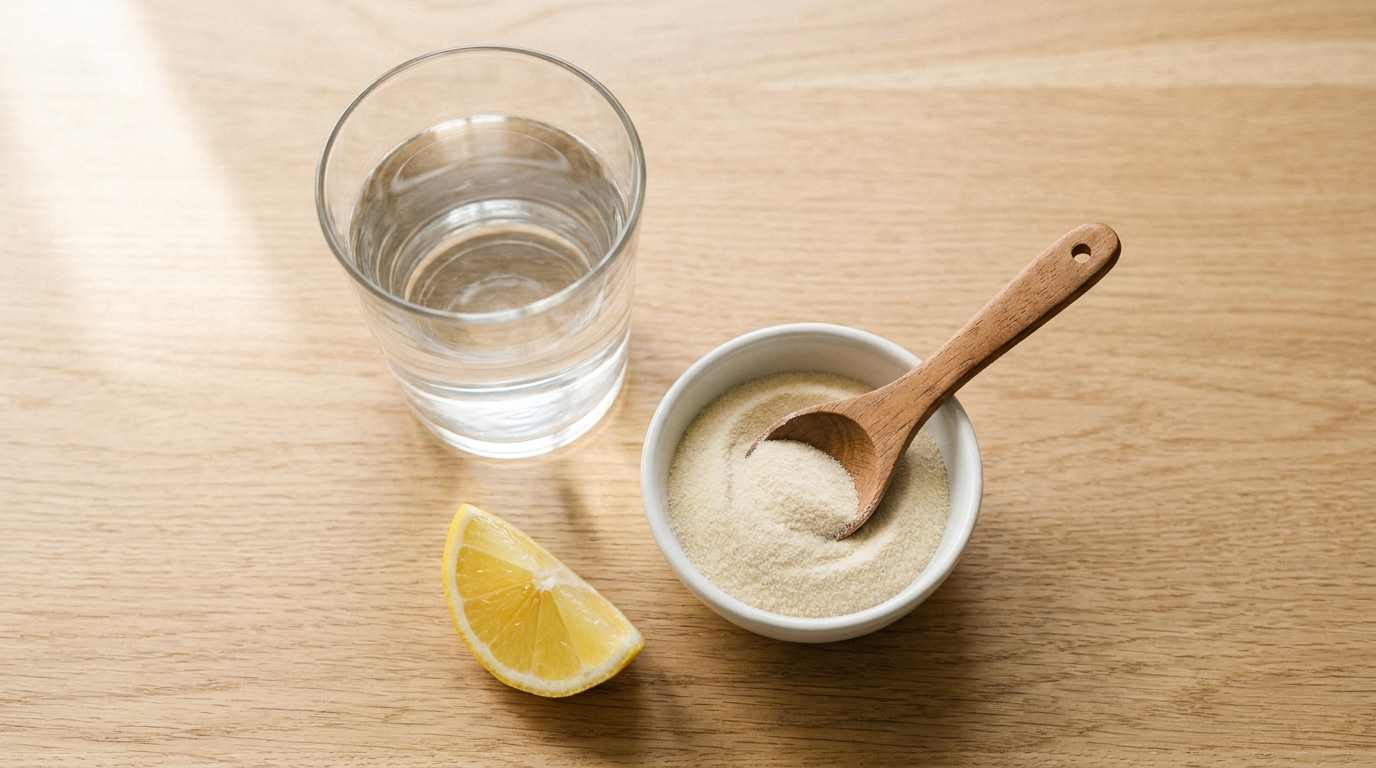
The gelatin trick uses unflavored gelatin before meals to blunt sugar spikes and cravings. 2026 guide: recipe, GLP-1 science, and who it helps.

The gelatin trick in 60 seconds — Sprinkle 1 tablespoon (≈7 g) of unflavored gelatin into 8 oz of cold water with a squeeze of lemon, let it bloom for 2 minutes, stir, and drink 15–20 minutes before a meal. The protein blunts post-meal glucose and triggers GLP-1 release, which increases satiety. Evidence is promising but early-stage — it works best alongside a protein-forward diet, not as a replacement. Skip it if you have kidney disease, are on anticoagulants, or are pregnant.
What is the gelatin trick?
The gelatin trick is the practice of drinking unflavored hydrolyzed gelatin dissolved in water 15–20 minutes before a meal, with the goal of reducing how much you eat and blunting the glucose spike that follows. It's not a cleanse, not a detox, and not a Jell-O cup. The active ingredients are collagen-derived protein and glycine, and the effect is almost entirely a satiety effect — the same mechanism that makes any protein preload work, just in a form that's cheap, shelf-stable, and doesn't require cooking.
Bone-broth traditions across Northern Europe and East Asia have served the same function for centuries. The modern repackaging as "the gelatin trick" took off on TikTok in late 2024 and was amplified by a series of viral videos in 2025. Some versions mix in green tea extract, turmeric, or lemon; the core idea is the same.

Does it actually work? The 2026 evidence
What has strong evidence (general protein preload). Taking protein 15–30 minutes before a meal to reduce postprandial glucose is well-supported in the clinical literature. A July 2024 systematic review in the Journal of Nutrition pooled 54 acute controlled trials and found that adding protein to a carbohydrate meal significantly reduced postprandial glucose, with effect size scaling with dose. A January 2025 trial in Metabolites showed a pre-meal whey protein microgel reduced postprandial glucose in people with type 2 diabetes through enhanced endogenous GLP-1 secretion. A May 2025 trial in Diabetes Care found the same effect in women with gestational diabetes.
What has weaker (but real) evidence for gelatin specifically. Gelatin-specific trials are older and smaller. The cleanest is a crossover study in Eating and Weight Disorders that fed a hydrolyzed gelatin meal to normal-weight and obese participants and found gelatin triggers a rise in plasma GLP-1 followed by increases in insulin and satiety markers — the same hormonal profile pre-meal whey produces.
The honest headline: gelatin works as a protein preload. It is not magic, not a shortcut, and the size of the effect depends on your overall diet and whether your baseline protein intake is already adequate.
The exact recipe
- Gelatin: 1 tablespoon (≈7 g) unflavored, grass-fed preferred. Hydrolyzed gelatin dissolves more cleanly in cold water than Knox-style bloom gelatin.
- Water: 8 oz cold or room-temperature.
- Optional: a squeeze of lemon (taste, no interference); a pinch of sea salt if you're on a low-sodium or ketogenic diet.
- Method: Sprinkle the gelatin across the surface of the water. Wait 2 minutes for it to bloom. Stir. Drink immediately. Do not microwave.
- Timing: 15–20 minutes before the meal you want to blunt. If you only do it once a day, do it before dinner.

Expert perspective
Dr. Layne Norton, PhD — Nutritional Sciences (University of Illinois), natural pro bodybuilder, founder of BioLayne. Norton's published work and public commentary argue that protein leverage — the idea that the body regulates intake primarily on protein availability — explains why pre-meal protein (in any form, including gelatin) reduces total calorie intake. His position: protein preloads are a legitimate behavioral tool, but they only move the needle if total daily protein is already adequate and the overall diet is structured for a calorie deficit.
See biolayne.com and @biolayne for primary-source commentary.
Dr. Tro Kalayjian, DO — Obesity medicine physician, founder of Dr. Tro's Medical Weight Loss and the Low Carb MD podcast. Kalayjian's clinical framework emphasizes satiety engineering — using pre-meal tools (broth, protein, fiber) to reduce caloric intake without relying on willpower. The gelatin trick is a low-cost entry point to that framework.
See doctortro.com for his clinical commentary.
Who should not try it
- Kidney disease or a history of kidney stones — gelatin is ~85% protein by dry weight and increases glomerular filtration load.
- Anticoagulant medication — gelatin contains bioactive peptides that may modestly affect coagulation; discuss with your prescriber.
- Pregnancy — not dangerous, but pregnancy-specific nutrition needs are already protein-elevated and a ritual adds nothing.
- Children and adolescents — gelatin is fine as food; a daily "trick" framework isn't right for developing bodies.
- History of disordered eating — pre-meal appetite-blunting practices can become restriction rituals. Speak with a clinician first.
The 2026 version vs. the viral-2023 version
Earlier viral versions pushed sweetened Jell-O cups as "the secret" and implied gelatin itself was a fat-burner. Both framings are wrong. The 2026 version — the one supported by the mechanism and evidence above — is plainly that gelatin is a cheap, practical way to do a pre-meal protein preload. No magic. No fat burning. Just satiety science, applied early.
FAQ
How much weight will I lose with the gelatin trick?
No reliable clinical number exists for gelatin specifically. For any pre-meal protein preload, randomized trials show modest reductions in post-meal calorie intake (5–15%) and better post-meal glucose control. Over time, that can translate to gradual weight loss — but only in the context of an overall calorie deficit. Gelatin alone does not cause weight loss.
Can I use flavored gelatin or Jell-O instead?
Not if you're optimizing for the mechanism. Flavored Jell-O is mostly sugar; it defeats the glucose-blunting purpose. Use unflavored hydrolyzed gelatin.
Is collagen powder the same as gelatin?
Essentially yes, for this purpose. Hydrolyzed collagen dissolves cleaner in water; gelatin gels when chilled. Both deliver the same amino-acid profile and the same GLP-1 trigger.
When should I do it — before every meal?
Once a day is enough for most people. Target your highest-glycemic meal (usually dinner) or the meal where you're most prone to overeating.
Can I take it with coffee?
Yes, mix into water with coffee on the side. Don't dissolve it directly into hot coffee.
Bottom line
The gelatin trick is a legitimate, cheap, well-tolerated version of a pre-meal protein preload. The 2024–2025 clinical literature on protein preloads strongly supports the mechanism. It works best as a small behavioral nudge inside a larger nutrition plan, not as a standalone weight-loss strategy. If you have no contraindications and want a five-minute ritual that makes dinner easier, try it for four weeks and re-evaluate.

.jpg)
.avif)

.avif)
