


PCOS Acne: What Causes It and How to Treat It Naturally
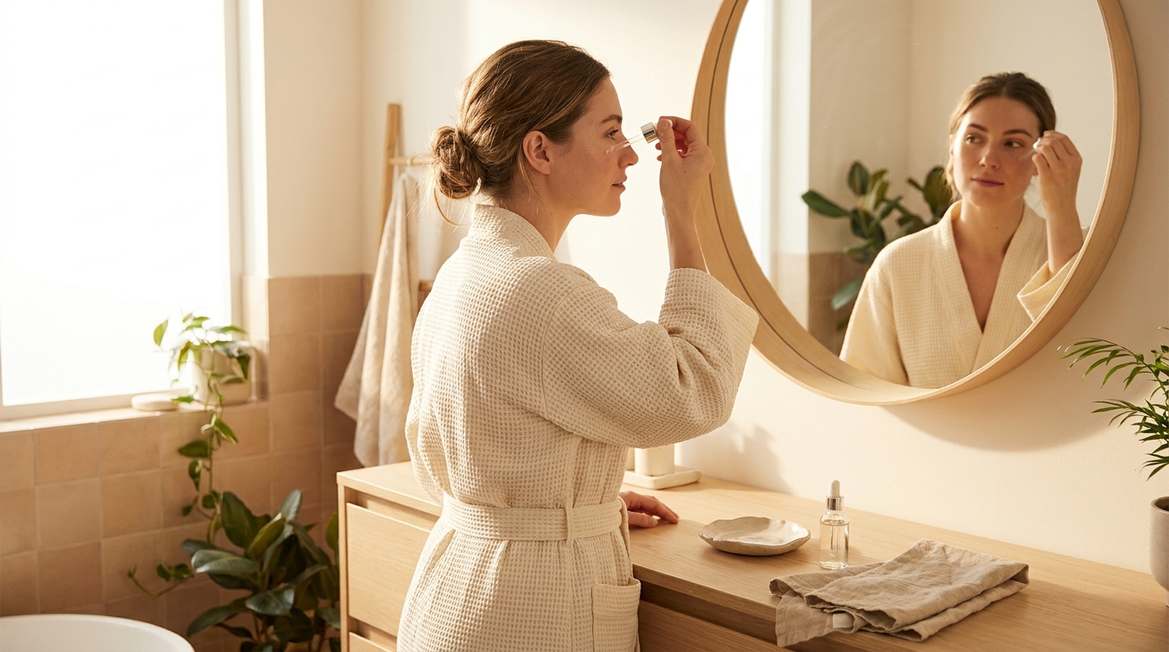
PCOS acne is driven by androgens and insulin — not dirty skin. Here's what actually works: from topical treatments to diet, supplements, and prescription options.

If you have PCOS, you already know this kind of acne is different. It doesn’t behave like the teenage breakouts you maybe got in high school. It lingers. It comes back in the same spots — the jawline, chin, and lower cheeks. It flares before your period (or when your period doesn’t show up at all). And it doesn’t respond to the usual drugstore routine.
That’s because PCOS acne isn’t a skincare problem — it’s a hormone problem that shows up on your skin. Up to 40% of women with PCOS experience persistent adult acne, and the root cause sits well below the surface: elevated androgens, insulin resistance, and inflammation working together to keep your pores in a constant state of overdrive.
This guide breaks down what’s actually happening, how to recognize PCOS-pattern acne, and what genuinely helps — from simple changes you can try this week, to dermatology-grade treatments, to the dietary and metabolic levers most skincare routines miss.
What PCOS acne looks like (and how it’s different from regular acne)
PCOS acne has a distinctive pattern most dermatologists recognize on sight:
- Location: Jawline, chin, lower cheeks, and sometimes the neck, chest, and upper back. The “hormonal triangle” from ears to chin is classic.
- Type: Deep, cystic, tender bumps that take weeks to resolve — not the small, superficial whiteheads of teenage acne.
- Timing: Flares in the week or two before your period, or unpredictably when your cycle is irregular.
- Persistence: Doesn’t respond to typical benzoyl peroxide, salicylic acid, or over-the-counter treatments that work on non-hormonal acne.
- Post-puberty onset: Often appears or worsens in your 20s and 30s, rather than fading after adolescence.
If this sounds like your skin, you’re dealing with androgen-driven acne — which means addressing the hormones, not just the surface, is what will actually move the needle.
Why PCOS causes acne: the hormone chain
Acne of any kind happens when four things line up: excess oil production, clogged pores, bacteria, and inflammation. In PCOS, the first domino — oil production — is driven hard by androgens (male-pattern hormones like testosterone and DHT that all women make, but in higher amounts in PCOS).
Here’s the chain:
- Insulin resistance raises blood insulin levels. High insulin has two direct effects on the ovaries: it tells them to make more androgens, and it lowers a liver-made protein called SHBG (sex hormone-binding globulin). Less SHBG means more “free” testosterone circulating unbound — the biologically active form.
- Excess androgens stimulate your sebaceous (oil) glands. These glands get larger and produce more sebum, thickening the skin’s surface oil.
- Androgens also change the quality of that oil and cause cells lining the pore to stick together. Pores clog more easily.
- The clogged, oil-rich pore becomes a perfect environment for bacteria (Cutibacterium acnes), which triggers immune activation.
- Inflammation — fueled by the chronically elevated insulin and androgens — makes the whole process more explosive. You get a deep, painful cyst instead of a small surface pimple.
This is why PCOS acne responds so differently to treatment: the usual acne products work on steps 3 and 4 (unclogging pores, killing bacteria). But for PCOS, steps 1 and 2 are the real engine. If you only treat the surface, the engine keeps running.
The insulin resistance link most people miss
About 70% of women with PCOS have insulin resistance, and it’s the single biggest lever in this picture. Insulin is not just a blood sugar hormone — it’s a direct amplifier of androgen production.
When insulin stays chronically high (even if your fasting glucose looks “normal”), your skin reflects it. Many women notice that their acne flares after weekends of restaurant food, alcohol, or disrupted sleep — all things that drive insulin higher.
This is why diet and metabolic health show up in almost every serious PCOS acne protocol, and why topical-only approaches tend to plateau. For the full metabolic picture, see our guide to PCOS and insulin resistance.
How PCOS acne is diagnosed
There’s no single lab test that says “this is PCOS acne.” Diagnosis usually involves:
- Clinical pattern recognition — the location, timing, and persistence described above
- Hormone labs — free and total testosterone, DHEA-S, SHBG, LH/FSH ratio
- Metabolic labs — fasting insulin, fasting glucose, HOMA-IR, and HbA1c
- Ruling out other causes — thyroid dysfunction, Cushing’s syndrome, late-onset congenital adrenal hyperplasia (rare but possible)
- Ultrasound — to evaluate the ovaries if PCOS hasn’t been formally diagnosed yet
If you suspect PCOS is driving your acne but haven’t been diagnosed, this is worth a conversation with your primary care doctor or an OB-GYN. The Rotterdam criteria require two of three: irregular cycles, elevated androgens (clinical like acne and hirsutism, or on labs), and polycystic ovaries on ultrasound.
What actually helps PCOS acne
PCOS acne rarely responds to a single intervention. The combinations that work best address the surface, the hormones, and the metabolic drivers at the same time. Below are the evidence-based options, roughly ordered from first-line to more aggressive.
1. Build a simple, non-irritating topical routine
You don’t need 12 products. You need a few that work and don’t strip or irritate hormonal skin:
- Gentle cleanser — avoid foaming sulfates that over-dry; oily skin that’s stripped makes more oil in response.
- Salicylic acid (BHA), 1–2% — oil-soluble, so it can penetrate pores to break up the congestion. Use 3–5 nights a week to start.
- Retinoid — adapalene (0.1%, available OTC in the US as Differin) is the gold standard first step. It normalizes cell turnover in pores, reducing clogs and post-inflammatory marks. Start 2–3 nights a week.
- Non-comedogenic moisturizer with ceramides or niacinamide — hormonal skin often has a compromised barrier. Rebuilding it calms inflammation.
- Sunscreen every morning — post-acne marks darken with sun exposure. SPF 30+ is non-negotiable if you’re using actives.
What to avoid: harsh scrubs, alcohol-heavy toners, fragrance-heavy products, and over-layering actives. Hormonal skin is reactive — less is more.
2. Rebuild insulin sensitivity
This is the step most skincare routines skip, and it’s often the one that actually changes the skin story over 3–6 months. Key strategies:
- Build meals around protein, fiber, and healthy fats before carbs — this blunts the insulin response even if carbs are in the meal.
- Cut liquid sugar — soda, sweetened coffees, juice, and “wellness” smoothies often spike insulin hardest.
- Walk 10–15 minutes after meals — muscles pull glucose from the blood without needing insulin when they’re contracting. This is one of the best-studied single interventions for insulin resistance.
- Strength train 2–3x per week — more muscle = more places for glucose to go, less insulin needed.
- Protect sleep — one night of short sleep measurably worsens insulin sensitivity the next day.
For the complete framework, see PCOS and insulin resistance.
3. Consider a PCOS-friendly diet approach
Specific dietary patterns that show the strongest evidence for PCOS skin:
- Lower glycemic load — not zero carb, but chosen carbs (oats, beans, lentils, berries, whole fruit) over refined ones (white bread, pastries, sweets).
- Dairy reduction trial — skim milk in particular has been linked to acne severity in some studies. A 6–8 week elimination can tell you whether you’re sensitive.
- Reduce ultra-processed foods — inflammation-driving for almost everyone, but especially for PCOS skin.
- Adequate protein at each meal — 25–35g per meal helps with satiety, muscle maintenance, and insulin control.
For a deeper look at what to eat and avoid for PCOS skin specifically, see our PCOS acne diet guide.
4. Evidence-based supplements
A handful of supplements have the best research for PCOS acne specifically:
- Myo-inositol + d-chiro inositol (40:1 ratio) — typically 2g myo-inositol twice daily. Strong evidence for improving insulin sensitivity, which indirectly lowers androgens. Often the most impactful single supplement for PCOS skin over 3–6 months.
- Spearmint tea, 2 cups daily — small but real studies show it reduces free testosterone. Won’t work overnight, but gentle and low risk. See does spearmint tea work for acne?.
- Zinc, 30–50mg/day — anti-inflammatory, slightly anti-androgenic, and genuinely useful for acne severity in trials. Take with food to avoid nausea.
- Omega-3s (EPA/DHA), 1–2g/day — reduces skin inflammation and may modestly improve insulin sensitivity.
- Vitamin D if deficient — common in PCOS; low D is linked to worse acne outcomes.
- NAC (N-acetylcysteine), 600mg twice daily — anti-inflammatory, reduces androgens in some studies.
Don’t start all of these at once. Pick one or two, give them 8–12 weeks, then reassess. Tell your doctor, especially if you’re on any medication.
5. Prescription options (when the above isn’t enough)
If 3–6 months of consistent lifestyle and topical changes aren’t getting you to where you want, prescription options from your dermatologist or gynecologist are worth discussing:
- Combined oral contraceptives (OCPs) — specific formulations (those containing drospirenone, norgestimate, or desogestrel) lower free androgens and reliably improve PCOS acne. First-line for many patients who aren’t trying to conceive.
- Spironolactone — a gentle anti-androgen that blocks testosterone at the skin level. Typically 50–100mg daily, often in combination with an OCP. One of the most effective targeted medications for adult hormonal acne. See spironolactone for PCOS hair and skin.
- Metformin — not a primary acne drug, but by improving insulin resistance it addresses an upstream driver. Especially useful if you have metabolic markers in addition to acne.
- Topical clascoterone (Winlevi) — a topical anti-androgen approved specifically for hormonal acne. Newer, and useful for people who want targeted effect without systemic medication.
- Topical or oral antibiotics — short-term only for inflammatory flares; not a long-term strategy.
- Isotretinoin (Accutane) — reserved for severe, scarring cases that haven’t responded to other treatments. Highly effective but requires careful monitoring and two forms of contraception (teratogenic).
This is a conversation to have with a dermatologist who understands PCOS — ideally one who works with your OB-GYN or endocrinologist.
How long before PCOS acne actually improves?
Managing expectations matters, because PCOS acne is a long game:
- Topicals — early improvements in 4–6 weeks, full effect at 3–4 months.
- Diet and metabolic changes — skin changes typically start to show at 8–12 weeks, meaningful at 3–6 months.
- Inositol and other supplements — 3–6 months for androgen-driven skin changes.
- Spironolactone — 2–3 months for early effect, 6 months for full benefit.
- OCPs — first 4–6 weeks sometimes worse before better, then steady improvement through months 3–6.
- Isotretinoin — dramatic improvement in 3–5 months of treatment, with long-term remission for many.
Consistency matters more than intensity. Adding a new product every three weeks because the current one “isn’t working” resets the clock every time.
Frequently asked questions
Is PCOS acne permanent?
No. PCOS acne is driven by hormones you can influence. Many women see complete or near-complete clearing with consistent treatment — though for most it’s an ongoing management story rather than a one-time cure. When insulin sensitivity improves and androgens come down, the acne engine quiets dramatically.
Can PCOS acne go away on its own?
Unlikely without any changes. PCOS acne often persists for years if the underlying insulin and androgen drivers aren’t addressed. The good news is that when those drivers do shift (through lifestyle, diet, supplements, or medication), the skin almost always follows — even if slowly.
Why is my acne on my jawline and chin specifically?
The oil glands on the lower face, jawline, and neck have more androgen receptors than those elsewhere. When circulating androgens are elevated, those glands respond first and hardest. This is the “hormonal triangle” signature of PCOS acne.
Will getting pregnant clear my PCOS acne?
Sometimes — pregnancy hormones can temporarily improve hormonal acne for some women, though others experience flares. After pregnancy, PCOS acne often returns unless the underlying insulin and androgen drivers are addressed.
Can stress cause PCOS acne?
Stress doesn’t create PCOS acne on its own, but it’s a major accelerant. Cortisol raises blood sugar, which raises insulin, which raises androgens. Chronic poor sleep compounds the effect. Managing stress isn’t a “nice to have” for PCOS skin — it’s part of the treatment.
Does birth control help or worsen PCOS acne?
It depends heavily on the formulation. Combined OCPs with drospirenone, norgestimate, or desogestrel tend to improve hormonal acne reliably. Progestin-only pills, hormonal IUDs, and some older OCPs with androgenic progestins can actually worsen it. This is a specific conversation to have with a prescriber who understands PCOS.
Is spironolactone safe long-term?
For most healthy women, yes. It’s been used for hormonal acne for decades. The main monitoring is potassium levels (periodically in the first year, then as clinically needed). It’s not a drug to take during pregnancy, so contraception is part of the protocol.
What about diet — is dairy really the problem?
Evidence is mixed and individual. Skim milk has the strongest link to acne in research; whole milk and fermented dairy (yogurt, kefir) have weaker or no associations. A 6–8 week elimination is a reasonable experiment, but don’t cut dairy indefinitely without noticing a real change.
The bottom line
PCOS acne isn’t about what you’re doing wrong on your face. It’s about what’s happening with your hormones and insulin — and both are more changeable than they feel when you’re in the middle of a flare.
The combination that works for most women: a simple, non-irritating topical routine, steady work on insulin sensitivity (diet, movement, sleep), one or two well-chosen supplements, and prescription support when the first layers aren’t enough. Three to six months of consistent effort usually shows real change.
You don’t have to piece it together alone. Take our quick PCOS profile and we’ll help you identify the most likely drivers of your acne and what to prioritize first — so you stop throwing skincare at a hormone problem.
Want a weekly PCOS skin-and-hormone roundup? Lose 42 lbs — practical, evidence-based, 5-minute reads from our clinical team.
Medically reviewed by: Dr. Basma Faris, OB-GYN Last updated: April 2026
References
- Rosenfield RL, Ehrmann DA. The Pathogenesis of Polycystic Ovary Syndrome (PCOS): The Hypothesis of PCOS as Functional Ovarian Hyperandrogenism Revisited. Endocrine Reviews. 2016;37(5):467-520.
- Teede HJ et al. Recommendations from the 2023 International Evidence-Based Guideline for the Assessment and Management of Polycystic Ovary Syndrome. Fertility and Sterility. 2023.
- Zouboulis CC et al. Frontiers in sebaceous gland biology and pathology. Experimental Dermatology. 2008;17(6):542-551.
- Arora MK, Yadav A, Saini V. Role of hormones in acne vulgaris. Clinical Biochemistry. 2011;44(13):1035-1040.
- Greff D et al. Inositol is an effective and safe treatment in polycystic ovary syndrome: a systematic review and meta-analysis of randomized clinical trials. Reproductive Biology and Endocrinology. 2023;21(1):10.
- Grant P. Spearmint herbal tea has significant anti-androgen effects in polycystic ovarian syndrome: a randomized controlled trial. Phytotherapy Research. 2010;24(2):186-188.
- Dréno B et al. Zinc salts effects on granulocyte zinc concentration and chemotaxis in acne patients. Acta Dermato-Venereologica. 1992;72(4):250-252.
- Kim K et al. The role of diet in acne: facts and controversies. Clinics in Dermatology. 2010;28(1):12-16.




.avif)
