


Does medication break a fast? An all-around guide for effective fasting

Does medication break a fast? Read a detailed guide that explains what breaks a fast to know which medications are fasting-friendly and get the most benefits.

Fasting means abstaining from food (and sometimes drink) for a certain period of time. Most often, it’s done for medical, religious, cleansing, and weight loss purposes. And the rules for each type of fast vary significantly, which makes it hard for people to understand what they can and cannot have while fasting.
Does medication break a fast? The answer depends a lot on the type of fast and the type of medication. Most fasts allow the continuation of necessary medications if they don’t contain calories or trigger certain metabolic responses. However, some fasts, such as strict religious ones, consider that anything that enters your stomach will break a fast. That is, they prohibit any medications with nutritive routes. Also, it’s important to note that certain types of medication contain carbs, sugar, and thus, calories. These can break most fast. And there are also medications recommended to be taken with food, which are also not safe for fasting.
{{button}}
Fasting means abstaining from food (and sometimes drink) for a certain period of time. It comes in many shapes and can have different purposes, from religious to weight loss. Regardless of the goal, there is one important rule for all fasts – you need to ensure that you don’t consume any prohibited foods and/or drinks in order not to break a fast.
Given that different fasts may require different restrictions, it can be hard to understand what can and cannot break yours. And this is especially tricky when it comes to consuming anything other than food or drink, such as medications.
Does medication break a fast? In this article, we’ll look at different types of fasts and explore whether they allow taking certain medications. Let’s dive in!
Understanding Different Types of Fasts
When you want to answer the question “Does medication break a fast?” It’s important to understand that every type of fast is different and comes with its own restrictions.
In particular, we can outline four main types of fasting:
- Medical fasting: Some medical tests and procedures (such as surgeries) require you to fast for a certain amount of time. Often, it implies 8 or more hours of fasting. This is important for diagnostic accuracy and general safety during procedures.
- Religious fasting: All faiths, including Christianity, Islam, Judaism, Buddhism, and others, have a form of fasting. They can have different forms and restrictions. For example, some imply going completely without food during certain days, while others require abstaining from certain types of foods like meat. In any case, it’s an important part of a person’s religious journey.
- Cleansing fasting: Some people practice prolonged fasting, such as a 3-day fast, to cleanse the body from toxins and initiate deep processes, such as autophagy (cellular repair).
- Intermittent fasting: The last common type of fasting is intermittent fasting. It’s a long-term dietary approach that implies setting fixed eating and fasting windows (for example, 16:8 fasting, which implies fasting for 16 straight hours and eating in the remaining 8), and following them every day. Often, the goal of such a fast is to limit the number of daily calories and stimulate weight loss.
What Breaks a Fast?
Technically, if we are speaking about general fasting rules, breaking a fast means consuming any calories. Most “clean” fasts only allow consuming water, plain coffee, or tea, but no food or beverages that contain additives and calories. However, there are certain variations and exceptions to the rules.
For example, “dirty” fasts are less restrictive. They usually allow consuming between 50-100 calories during your fasting windows because such a small amount of calories is not considered to significantly hinder the weight loss process.
On the other hand, there are fasts aimed at stimulating certain processes in your body. In this case, anything that disrupts these processes can break a fast. This can include foods and/or beverages that cause:
- Insulin spikes
- Digestion and metabolism stimulation
- Autophagy disruption
Does Medication Break a Fast?
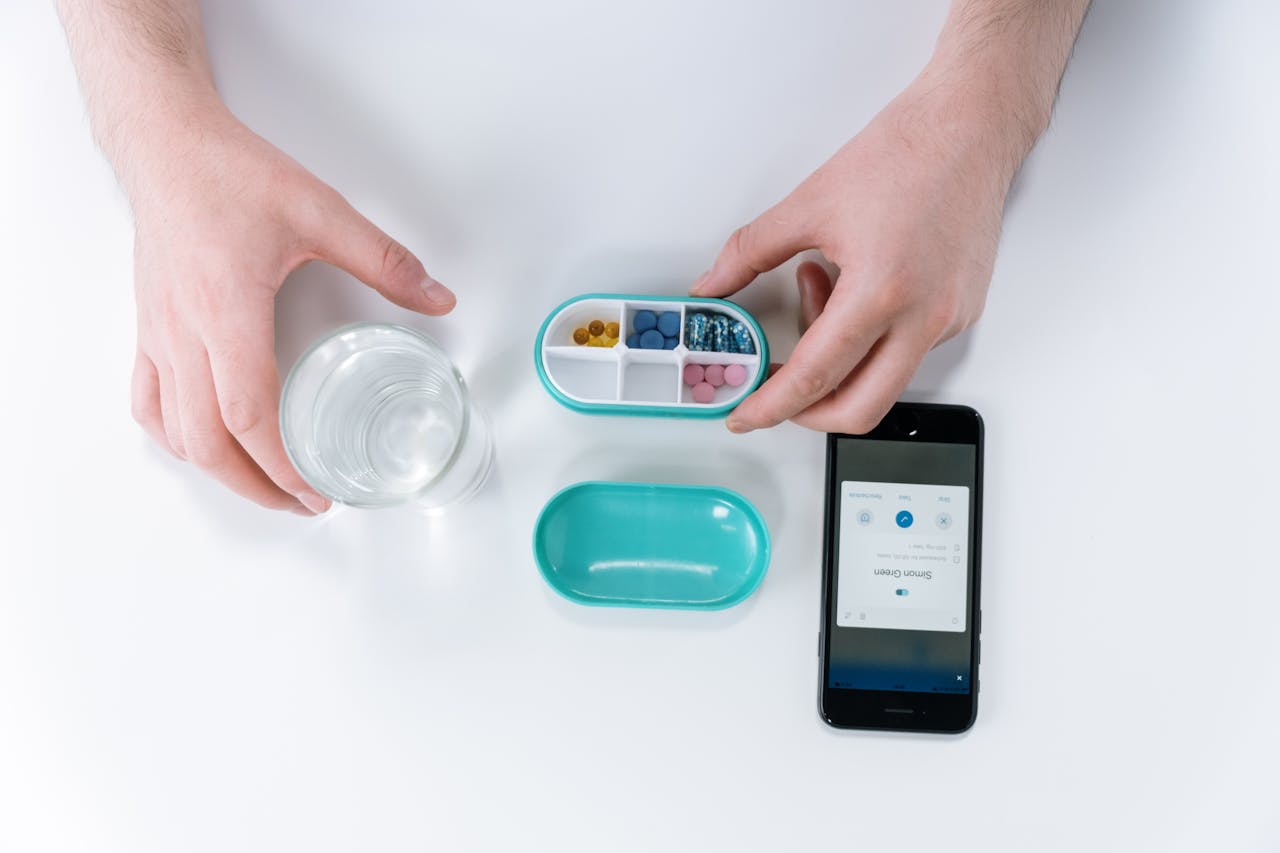
Technically, taking medication while fasting is safe. If we are talking about abstaining from caloric intake, it’s fair to say that most medications (such as pills and capsules) don’t contain calories. Thus, taking them should not interrupt any fasting processes.
However, as you now know, “what breaks a fast” is a rather abstract concept that can change depending on the type of fast and its goals. So, let’s look at each in detail.
Does Medication Break a Fast During Medical Fasting?
No, medication intake typically doesn’t break a medical fast. Often, medical fasting doesn’t allow eating or drinking anything at all. However, most doctors will allow you to continue necessary medications with a small amount of water.
Advice: Usually, your healthcare provider will provide you with explicit instruction of what you can and cannot have during your pre-test or pre-procedure fast. If you aren’t sure about a specific type of medication, don’t hesitate to clarify it with your doctor.
Does Medication Break a Fast During Religious Fasting?
Yes, it might. The answer depends greatly on the type of religion. Some religions, such as Christianity and Hinduism, only require abstaining from “luxury” foods, often meat, dairy products, etc. In such fasts, taking the necessary medications might not be prohibited.
Islamic fasting (e.g., Ramadan), on the other hand, is more restrictive. It implies that a fast is broken by anything swallowed orally that enters the body cavity. That is, taking medications with nutritive routes is prohibited. However, patches, injections, and sublingual medications might be allowed.
Advice: If you’re concerned about the intake of any medications during a religious fast, it’s best to check with your tradition’s doctrine.
Does Medication Break a Fast During Cleansing Fasting?
It’s not fully known yet. Detoxifying fasting that targets autophagy relies on the complete absence of calories and macronutrients. Respectively, it’s fair to assume that zero-calorie medications should be safe. However, currently, there are no sufficient studies to confirm or dispute this.
Advice: If the goal of your fasting is autophagy, it might be best to plan your medication intake in a way that it fits into your eating window (if possible). This should help you stay on the safe side.
Does Medication Break a Fast During Intermittent Fasting?
Some medication types can. Intermittent fasting is mainly aimed at weight loss. For this reason, it implies consuming no (or very little) calories during fasting windows and avoiding insulin spikes.
Most medications don’t contain calories or sugar. They are generally safe for intermittent fasting. Yet, certain types of medications can break your fast. These include medications that:
- Contain sugar and other additives.
- Contain calories.
- Have to be taken with food.
Fasting-Safe Medications: What Can and Cannot Break a Fast?
So, does medication break a fast? As you now see, the answer depends on a wealth of factors. And while some types of fasting prohibit medications, others may allow taking them, but only the types that don’t contain calories or trigger certain inner mechanisms, such as insulin spikes.
How can you tell the difference? To help you answer this, we’ve prepared answers to questions on the most common types of medications. Let’s see which of them are and aren’t fasting-safe.
Does Viagra Break a Fast?
No. Viagra (or sildenafil) typically contains no or very few calories. Hence, it’s safe for many types of fasts, excluding some religious ones like Ramadan. It’s also recommended to take it on an empty stomach. So it’s fasting-safe.
Does Aspirin Break a Fast?
No. On its own, aspirin doesn’t contain calories and thus can’t break a fast, unless it’s Ramadan or another fast that doesn’t allow anything to enter your stomach. However, this medication is often not recommended to be taken on an empty stomach to avoid irritation.
Does Lemsip Break a Fast?
Yes. Lemsip is a flavored sachet that contains carbs and sugar. This means that you consume a certain amount of calories with this medication, which also triggers an insulin response.
Does Lisinopril Break a Fast?
No. Most types of fasting won’t be affected by lisinopril intake. This medication doesn’t contain calories or affect your insulin or lipid metabolism. Yet, it can break some religious fasts. And experts emphasize that taking blood pressure medication while fasting requires careful planning and supervision of a healthcare provider.
Does Pantoprazole Break a Fast?
No. Pantoprazole is generally considered to be fasting-friendly. This medication does not contain calories or trigger a metabolic response. Moreover, it’s recommended to be taken on an empty stomach, which makes it safe for most fasts, except for strict religious ones.
Does Trazodone Break a Fast?
No. On its own, trazodone doesn’t contain calories or have a notable metabolic impact, which means that it won’t break most fasts (except for religious ones). However, this medication is typically recommended to be taken with food for better absorption and reduced dizziness, which makes it better to plan its intake for your eating windows.
Does Citalopram Break a Fast?
No. Citalopram is a medication commonly used to treat depression. It contains no to very few calories, which means that it cannot trigger a metabolic response that would break your fast. However, taking this medication during your fasting windows can cause certain side effects, such as nausea.
Does Tylenol Break a Fast?
No. Tylenol contains either no or negligible calories. This medication doesn’t cause metabolic responses or insulin spikes, which makes it safe for many fasts, except for very strict ones.
FAQ
Does medication break a fast?
It depends on two things. Firstly, the type of fast. If it’s a strict religious fast, such as Ramadan, it might prohibit anything from entering your stomach and only allow patches, injections, and sublingual medications. Other types of fasting may allow medication intake, as long as there are no calories or metabolic response.
How to distinguish fasting-friendly medications?
Firstly, consider your type of fasting to define whether it generally allows you to take medications. In the case of a medical fast, consult with your doctor if anything is unclear. For regular fasts, look at the content of your medication. If it’s free of calories and sugar, it might be safe to take.
Conclusion
So, does medication break a fast? It might. Fasting is a rather tricky thing that comes with many different rules and restrictions. What can and cannot break a fast depends a lot on what kind of fasting you are doing and your goals.
Hopefully, this article will help you understand what is safe during fasting and what is not. Use the knowledge from this article to make the most out of fasting. And don’t hesitate to consult with a healthcare provider if you have additional questions.
{{pink-banner}}


.avif)
