


10 week ultrasound: Everything you should know to prepare
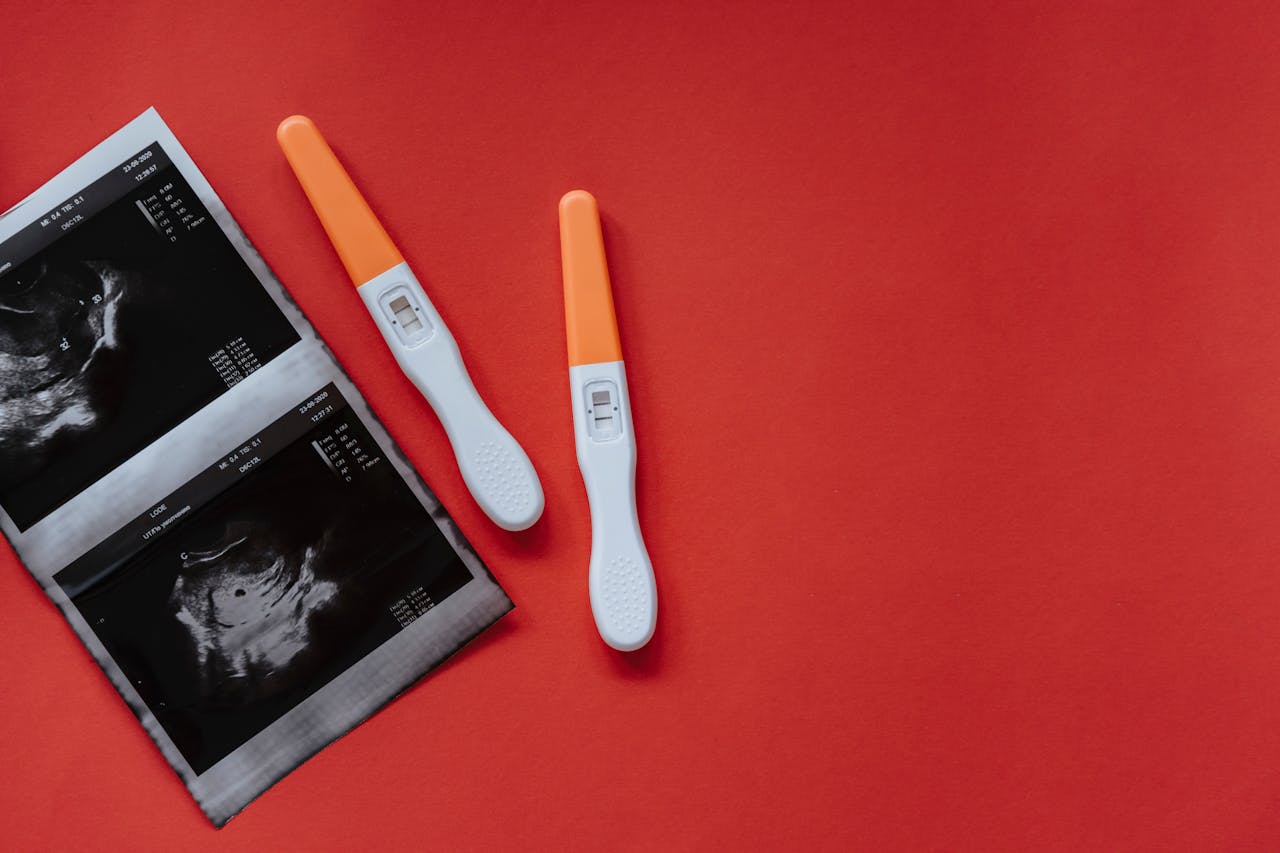
A 10-week ultrasound confirms a heartbeat, dates the pregnancy, and screens for early markers. Here's what to expect, how to prep, and what they look for.

Is a 10 week ultrasound too early? No, it’s not considered early. At 10 weeks, you’re coming closer to the end of your first trimester, which is why it's actually a common time for having your first screenings as a part of routine prenatal care.
During a 10 week ultrasound, a healthcare provider can confirm pregnancy viability, detect your gestational age, and estimate the expected due date. Also, at this time, it’s possible to detect a multiple pregnancy and check for any possible complications.
Although it’s not too early for an ultrasound, your baby is still rather small at 10 weeks. That’s why doctors mainly use a transvaginal ultrasound (instead of an abdominal one) to receive a clearer image.
{{button}}
At 10 weeks of pregnancy, you’re approaching the end of the first trimester rapidly, and, possibly, are counting down the weeks until the second trimester begins. Although 10 weeks isn’t that early into your pregnancy, there might still be many uncertainties left, especially if you haven’t had your first screening appointment yet. As we all know, handling this uncertainty can be incredibly emotionally draining. So it’s no surprise if you are looking forward to finally seeing your baby and assessing how well it develops.
At this point, you might be guessing whether a 10 week ultrasound can give you the reassurance and peace of mind you’re hoping for. Or is it still too early?
In this article, we’ll delve into the specs of a 10 weeks pregnant ultrasound, explore how your baby is developing at this stage, and answer some of the most common questions to help you understand what to expect.
Understanding Pregnancy Ultrasound: When Should You Expect Your First Screenings?
An ultrasound is one of the essential screening tools used in pregnancy. It holds a significant value in your journey across every trimester:
- In the first trimester, an ultrasound is used to confirm pregnancy, identify multiples, and rule out complications like an ectopic pregnancy.
- In the second trimester, an ultrasound is used for a thorough anatomical assessment to confirm normal fetal development and detect abnormalities.
- In the third trimester, an ultrasound is used for continuous monitoring of the fetal and maternal health, as well as for the placenta and amniotic fluid assessment.
The main question mothers-to-be face in early pregnancy is how soon they can see their baby on an ultrasound for the first time. The answer to this question varies a lot based on your healthcare provider and individual symptoms. Generally, doctors can detect pregnancy and make a preliminary assessment as early as 5 weeks. This is the earliest ultrasound screening you may have. But it’s normally performed if there are medical indications for it, such as bleeding, pain, or a high-risk pregnancy.
In most cases, the first early pregnancy ultrasound is done between 6-9 weeks. However, some healthcare providers may want to wait longer, until 10-12 weeks.
Is a 10 Week Ultrasound Too Early?
No, it’s not. If you’ve been waiting to finally have your first screening, the good news is that 10 weeks is certainly not too early for it. In fact, this is a good time to have your first ultrasound scheduled as a part of your routine prenatal care.
Your doctor can suggest you do it at any time between 7 weeks and 12 weeks, with 10 weeks being a popular median time.
Reasons to Have a 10 Weeks Pregnant Ultrasound
In routine prenatal care, a first-trimester ultrasound performs several important functions. If you didn’t have it earlier, a 10 week ultrasound allows a doctor to scan the following:
- Viability – In pregnancy, “viability” means the potential of a pregnancy to develop normally. And confirming this is one of the primary reasons for early scans. During a viability assessment, a healthcare provider will first locate the fetus to ensure that it’s inside the uterus. Secondly, a doctor will try to detect the heartbeat, which is one of the core indicators of viability.
- The number of embryos – Apart from confirming pregnancy viability, healthcare providers use early screenings to detect the number of babies. If you’re having twins or multiples, a doctor should be able to tell that during your first-trimester screening.
- Gestational age and due date – During a 10 week ultrasound, a healthcare provider will measure the crown-rump length of the embryo. This is the length from the top of the head to the bottom of the buttocks. This measurement can tell you how far along you are in your pregnancy and help calculate the expected due date.
- Problems and complications – Lastly, first-trimester ultrasounds are crucial for detecting any problems that might be there. Together, the images from an ultrasound and the results from your blood tests can help doctors identify the risk of different complications, including genetic disorders.
How Is a 10 Week Ultrasound Done?
A big share of first-time parents have false expectations concerning their first screening. The thing is that they expect to have an abdominal ultrasound, one they’ve seen plenty of times on TV. Yet, the truth is that you are not likely to have a 10 week abdominal ultrasound.
An abdominal ultrasound is usually done later, after 11 weeks. This is because it doesn’t provide a clear image of a fetus that’s still very small. Instead, at this time, healthcare providers do a different type of screening – a transvaginal ultrasound. It’s a more preferred method because it allows for placing a transducer close to your pelvic organs and thus, receive a more detailed and clear image of a baby.
With that in mind, you should be prepared that your first ultrasound will also be transvaginal, especially if done before 11-12 weeks. However, there are absolutely no reasons to worry about this. This procedure is quick and painless, and it doesn’t cause any harm to you or your baby.
What’s Your Baby Like at 10 Weeks?
10 weeks is a rather big term in pregnancy. By this time, you will already notice some physical changes in your body. Your breasts will become more swollen, and you may start struggling to do up your jeans. This is all because your baby is growing fast at this time.
Despite fast growth, your baby is still quite small at 10 weeks. It should be around 30 mm long, which is around the size of an apricot.
What Does a 10 Week Ultrasound Look Like?
Since your baby is still small, it’s important that you set realistic expectations of what you will see in an ultrasound.
You can be ready to see a more recognisable (compared to earlier weeks) baby shape at this time. You should be able to see a curved, C-shaped body with a head and torso. Also, there should be visible, but still tiny limbs. Sometimes, you may even see fingers, toes, and bent elbows or knees. And the spine is also often visible at this time.
Apart from your baby, you will see the basic pregnancy structures in an ultrasound. These include the gestational sac, the yolk sac, and the umbilical cord.
Some parents are surprised to see their babies moving actively during a 10 week ultrasound. In fact, by this time, your baby may move more freely, engaging separate limbs. So, it’s not odd to see a lot of movement in an ultrasound.
Last, but not least, a normal 10 week ultrasound should also detect a heartbeat. It’s possible to detect the heartbeat visually by seeing the flickering motion of the cardiac tissue. However, at 10 weeks, you can already have your first experience with Doppler devices, which give you an audible detection of the heartbeat. However, no matter how excited you might be about hearing your baby’s heartbeat, please remember that Doppler detection results can vary depending on your body composition and baby’s position. So, don’t get too stressed if the device doesn’t let you hear much; it might be just because more time is needed.
FAQ
Is a 10 week ultrasound just a routine procedure or a reason to be worried?
There is no one-size-fits-all answer to this question. Normally, 10 weeks is a good time to have your first routine screening to confirm pregnancy viability and estimate the due date. However, every practice is different, and some doctors may want to have your first routine screenings later. In this case, they might schedule an ultrasound earlier if there are any medical indications for this, such as pain, bleeding, or other adverse symptoms. However, even if you are scheduled for an earlier visit, it doesn’t necessarily mean that something is wrong. It’s just something your healthcare provider needs to do to rule out any complications.
Can I have a 10 week abdominal ultrasound?
It’s unlikely. Typically, an abdominal scan is performed later, starting from 11-12 weeks. This is due to the fact that your baby is still small, and an abdominal ultrasound may not be able to show an image as clear as a transvaginal one. However, this is not something you should be worried about. Transvaginal ultrasounds are common and absolutely safe both for you and your baby.
Can I see my baby during a 10 weeks pregnant ultrasound?
Yes, you should be able to see your baby during this procedure, and this might be one of the most exciting things about your first ultrasound. However, it’s important that you have realistic expectations. It’s important to remember that your baby is still very small and is only starting to shape its primary features. You will be able to see a round body with a head and torso, and limbs. You can also expect the heartbeat to be more detectable.
Conclusion
As you now know, a 10 week ultrasound is not too early for a first-trimester screening. In fact, there is quite a lot you can learn about your pregnancy and its development from it. Not without a reason, this time is quite common for scheduling the first routine screening.
After reading this guide, you should know how exactly a 10 week ultrasound is done and what you can expect from it. Keep this knowledge in mind to reduce stress and set realistic expectations.
{{pink-banner}}




.avif)
